
- Explore the historic Red Fort in Delhi
- Visit India's iconic heritage landmarks
- Discover the world-famous Ajanta and Ellora Caves
- Experience ancient Buddhist, Hindu, and Jain rock-cut architecture
- Visit the magnificent Mysore Palace
- Explore Mysore's royal and cultural attractions
- Relax on Goa's beautiful beaches
- Enjoy Portuguese heritage, nightlife, and local cuisine
- Comfortable hotels, private transfers, and guided sightseeing
- Description
- Itinerary
- Reviews
-
If you laid this trip out on a map, it wouldn't look like a straight line — it looks more like a slow arc across four completely different periods of Indian history, ending on a beach with nothing historical to think about at all. That arc is exactly the point. This route was built for travellers from Stuttgart who have enough time to go deep rather than wide, moving from Mughal Delhi through the cave temples of the Deccan, into royal Karnataka, and finishing on Goa's coast.
A Journey Told in Four Chapters
Rather than think of this as four disconnected stops, it helps to think of it the way we plan it internally — as four chapters, each with its own century and its own architectural language:
1.The Mughal chapter in Delhi, centred on Red Fort2.The rock-cut chapter in Maharashtra, at Ajanta and Ellora3.The royal Karnataka chapter, at Mysore Palace4.The unwinding chapter, on Goa's beachesEach chapter is separated by centuries and by an entirely different building philosophy — from fortified sandstone, to caves carved directly into basalt cliffs, to Indo-Saracenic palace domes, to nothing built at all. That range is unusual for a single trip, and it's what makes this route worth the extra planning it takes.
Chapter One: Delhi's Mughal Legacy at Red Fort
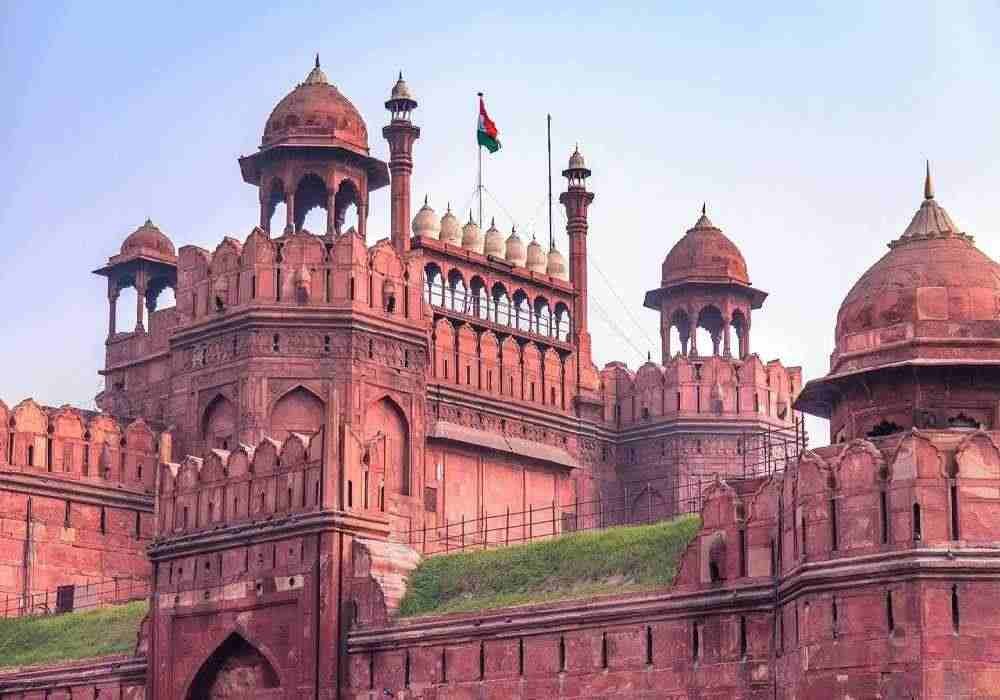
Red Fort was commissioned by Shah Jahan in 1638 as the residence of Mughal emperors, and it remained the seat of Mughal power for roughly two centuries. Walking through the Lahori Gate into the fort's interior, you pass through Chhatta Chowk, a covered bazaar that once sold silks and jewellery to the imperial court, before reaching the Diwan-i-Aam and Diwan-i-Khas — halls of public and private audience where emperors once held court. The fort is also where India's Prime Minister addresses the nation every Independence Day, which adds a layer of modern political weight to a structure already carrying four centuries of history. It's the natural place to begin this trip, since almost everything that follows can be read as a variation on how different Indian dynasties expressed power through architecture.
Chapter Two: The Rock-Cut Wonders of Ajanta and Ellora
This is the part of the trip most travellers underestimate before they arrive, and the part they talk about most afterward.
Ajanta Caves
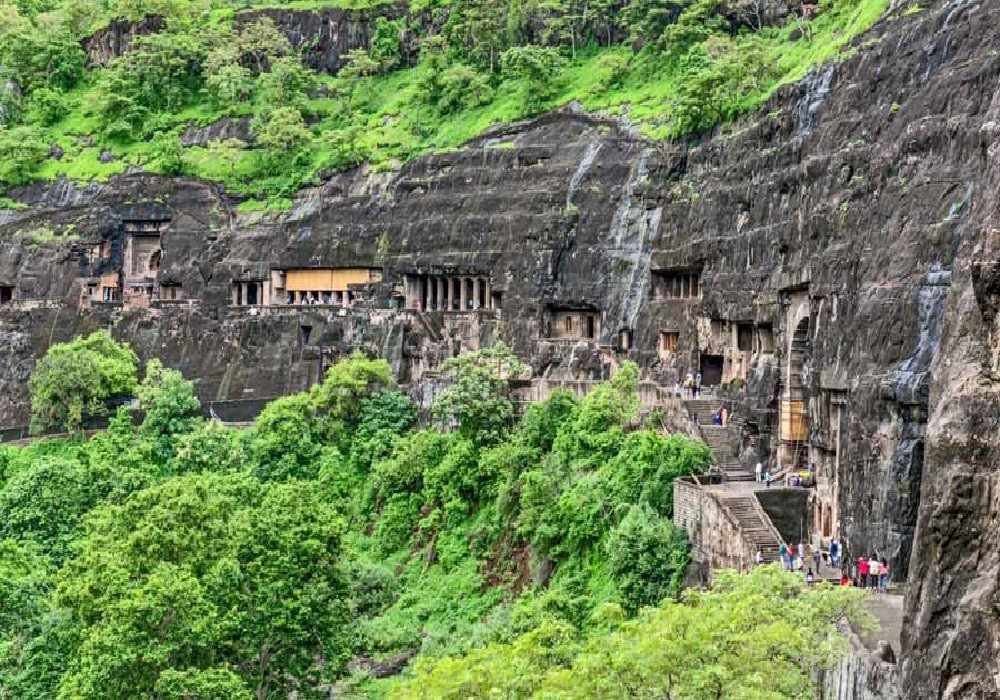
Carved into a horseshoe-shaped cliff above the Waghora River, the Ajanta Caves date back as far as the 2nd century BCE, with a second major phase of construction around the 5th century CE. What sets Ajanta apart is the preservation of its Buddhist paintings — some of the oldest surviving examples of Indian mural art, depicting Jataka tales and scenes from the Buddha's life in colours that have survived close to two thousand years inside the caves' relatively stable, shaded interior.
Ellora Caves
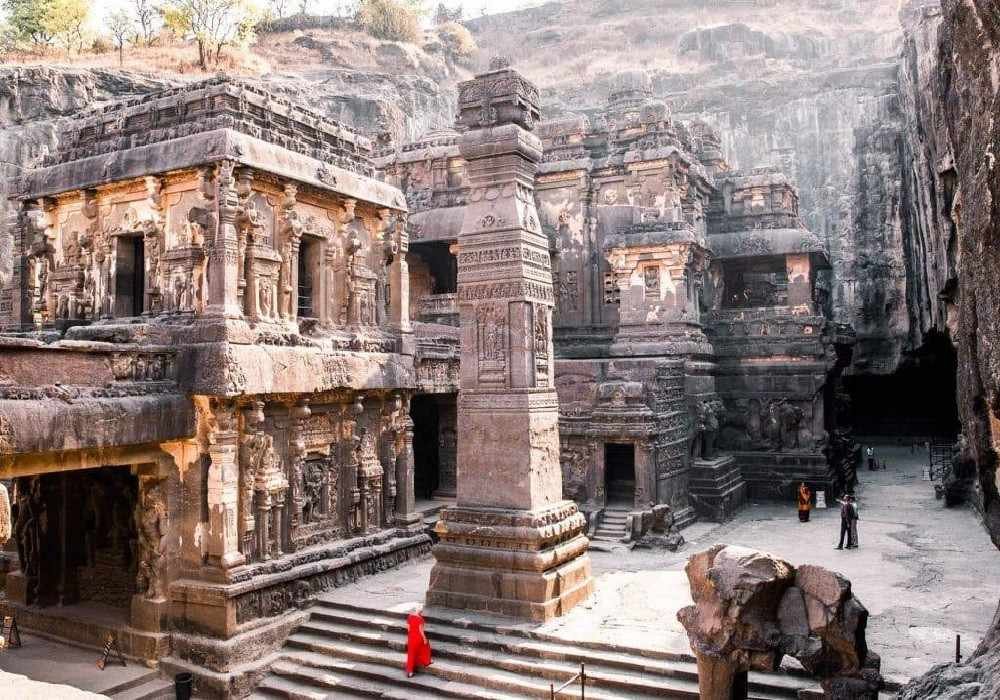
A short distance away, Ellora takes a different approach entirely. Instead of one religious tradition, Ellora's 34 caves represent Buddhist, Hindu, and Jain monastic and temple architecture side by side, carved between roughly the 6th and 10th centuries CE. The undisputed highlight is the Kailasa Temple, a single monolithic structure carved downward out of one massive rock face rather than built up from the ground — a feat of engineering still debated by architectural historians for how it was planned and executed without modern tools.Together, Ajanta and Ellora form one of India's most significant UNESCO World Heritage clusters, and they reward at least a day and a half of unhurried exploration rather than a rushed half-day stop.Chapter Three: Royal Karnataka at Mysore Palace
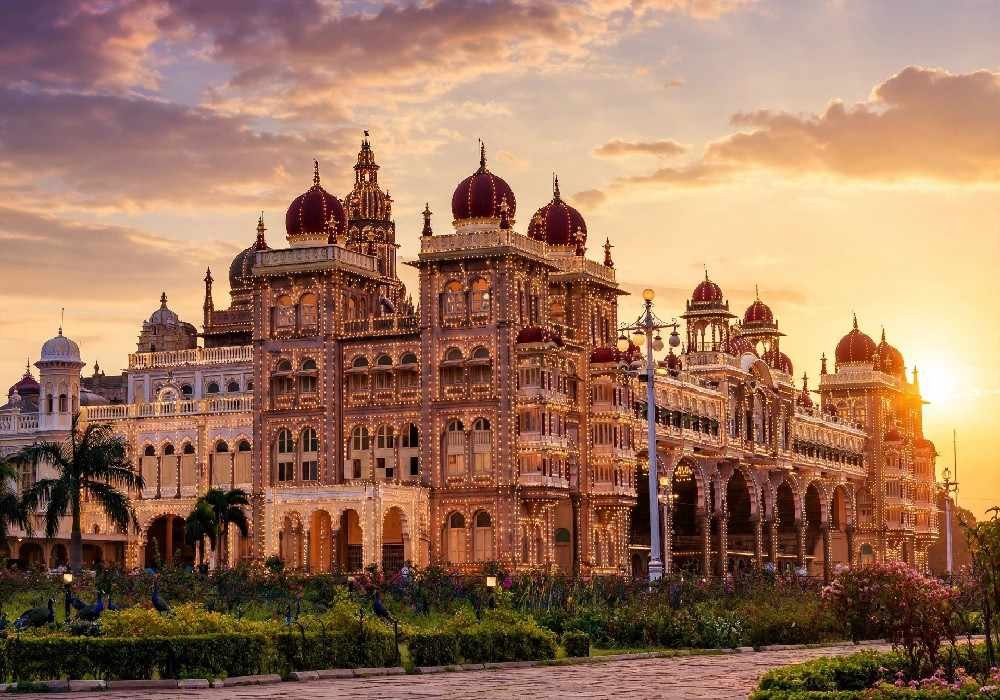
After the cave temples' silence, Mysore Palace brings the trip back into colour and ceremony. Home to the Wadiyar dynasty, the current palace was rebuilt in Indo-Saracenic style following a fire that destroyed the original wooden structure in the late 19th century. The Durbar Hall's stained glass and gilded ceilings, and the Kalyana Mantapa's peacock-motif stained glass dome, reflect a very different design language from the caves you'll have just left behind — ornate rather than austere, colourful rather than stone-toned. If your dates allow it, timing this stop around Dussehra (usually September–October) means seeing the palace illuminated with close to 100,000 bulbs and the city's famous elephant processions moving through the streets.
Chapter Four: Goa, Where the Trip Lets Go
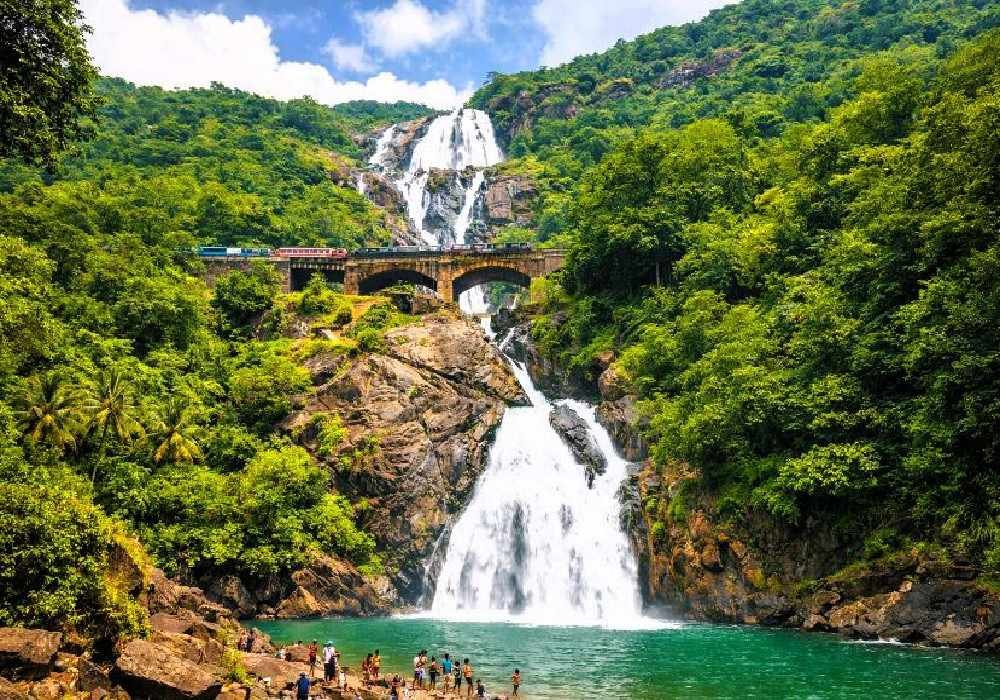
By the time this route reaches Goa, it has covered roughly seven centuries of Indian architecture and religious history. Goa doesn't try to compete with that — instead, it offers the opposite. Former Portuguese territory until 1961, its churches and old-town architecture carry a European layer unlike anything earlier in the trip, but the real draw at this stage is simpler: beach shacks, fresh seafood, and enough unscheduled time to simply stop moving for a few days. North Goa's beaches suit travellers who still want some activity in the evenings; South Goa suits those who'd rather the trip end quietly.
Planning Notes for This Route
Best Season to Travel
October to March suits Delhi, Ajanta-Ellora, and Mysore comfortably, avoiding both monsoon rains and peak summer heat. Goa follows the same window, with November to February being its most pleasant stretch for beach days.
How Much Time to Set Aside
Because this route spans four distinct regions with no direct road corridor between them, most travellers need 12 to 14 days to do it justice, with Ajanta-Ellora alone benefiting from at least a day and a half rather than a rushed single visit.
Who This Route Is Built For
This trip suits travellers who want cultural and architectural depth over a fast-paced checklist — the kind of traveller happy to spend a full morning inside a single cave complex, and equally happy to spend a full day doing nothing on a Goan beach afterward.
Why Plan This With a Delhi-Based Team
A route spanning Delhi, Maharashtra's cave temples, Karnataka's royal city, and Goa's coast needs planning that accounts for very different regional logistics, seasonal patterns, and pacing needs. Our team has run this exact combination for European travellers repeatedly, which is why the sequencing — Mughal Delhi, then the caves, then royal Karnataka, then the coast — is built around how each chapter contrasts with the one before it, not just geographic convenience. Being based in Delhi also means we're available in the same time zone throughout your trip, so any on-ground changes get handled quickly.
Interested in tracing Mughal Delhi, the cave temples of Ajanta and Ellora, royal Mysore, and Goa's coastline on one trip? View the day-wise itinerary → or get in touch with our travel team to plan your route from Stuttgart.
Package Inclusions
- Accommodation in selected hotels and resorts
- Daily breakfast
- Airport transfers and assistance
- Intercity transportation as per itinerary
- Private air-conditioned vehicle for sightseeing
- Professional driver and local support
- Toll taxes, parking fees, fuel charges, and driver allowances
Package Exclusions
- Hotel taxes and service charges
- International airfare from Stuttgart
- Domestic flights within India (unless specified)
- India tourist visa charges
- Travel insurance
- Lunches and dinners
- Monument and cave entrance fees
- Water sports and optional activities in Goa
- Personal expenses and shopping
- Laundry, minibar, and telephone expenses
- Early check-in and late check-out charges
- Tips and gratuities
Frequently Asked Questions About "Stuttgart to Red Fort Ajanta Ellora Mysore Palace Goa Tour Package"
Is it worth visiting both Ajanta and Ellora, or should we pick one?
Both, if your schedule allows — they represent different eras and different religious traditions, and seeing them together gives a far more complete picture than visiting just one.
How physically demanding is the Ajanta-Ellora leg?
There's a fair amount of walking and some stairs at both sites, particularly at Ajanta, which involves a climb up to the cave entrances. Comfortable footwear is essential.
Can Mysore Palace be visited around a specific festival?
Yes — Dussehra (September–October) is the most spectacular time to visit, with palace illuminations and processions, though the palace is worth seeing in any season.
Is this itinerary suitable for travellers without a strong interest in history?
It's built primarily for travellers who enjoy history and architecture, though Goa at the end balances that out with pure leisure time.
Can the route be shortened if we have less time?
Yes, though we'd recommend keeping all four chapters rather than dropping one — if time is tight, we typically suggest reducing days in Goa slightly rather than cutting Ajanta-Ellora or Mysore short.
-
-
Day 1
-
Day 2
Delhi Heritage Tour
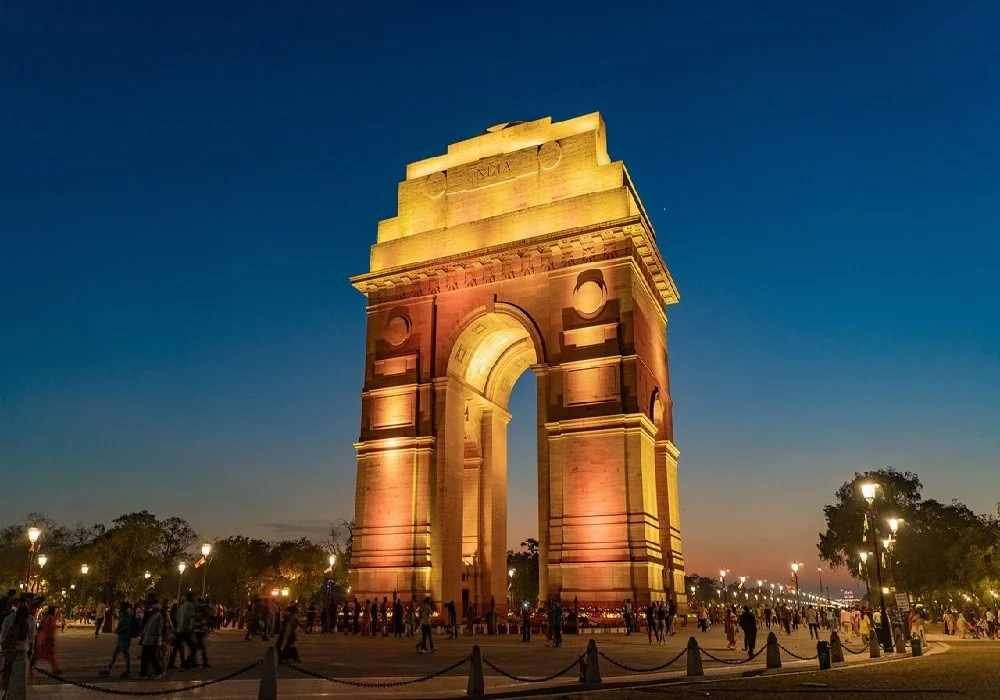
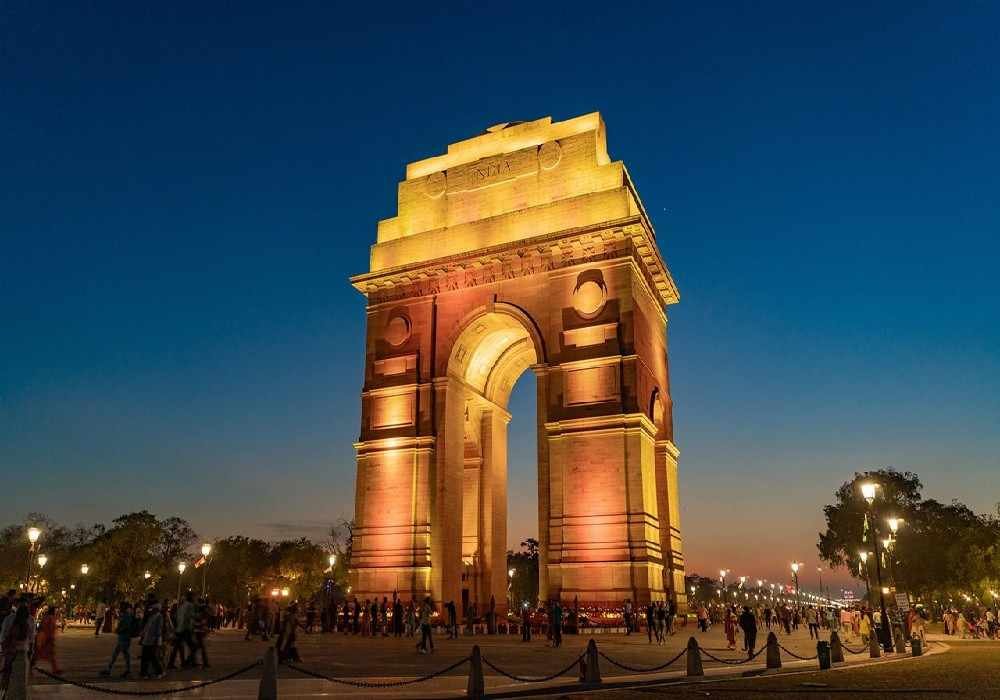
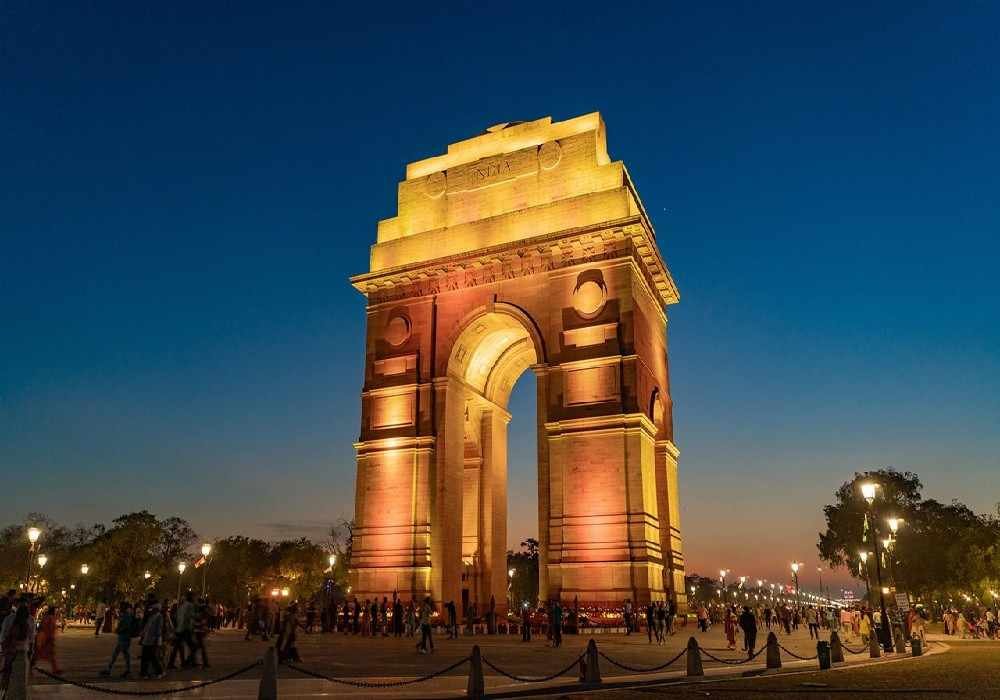
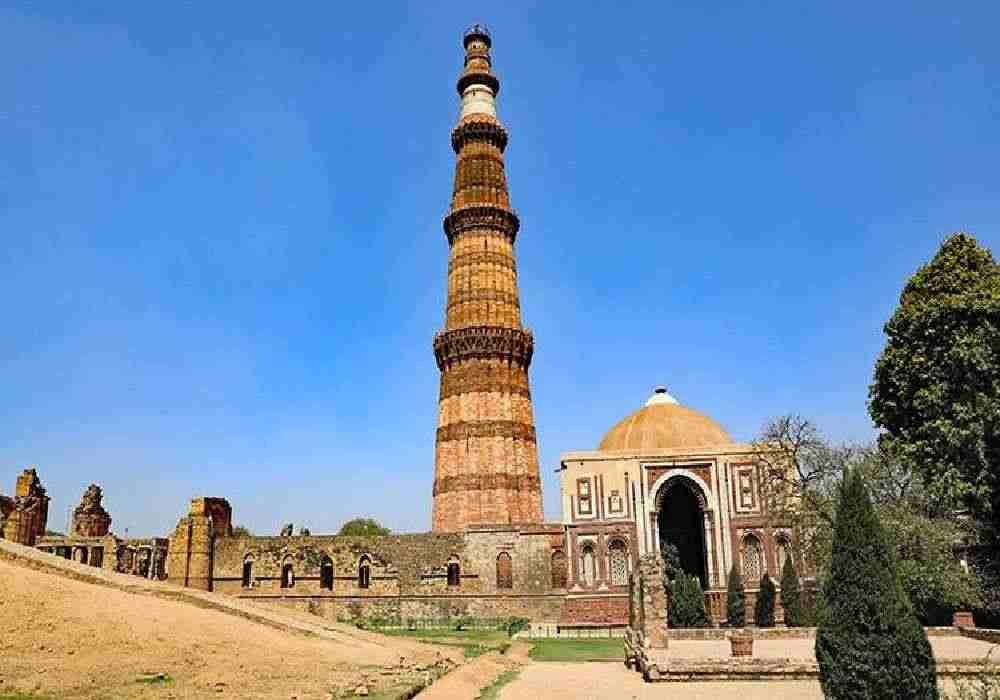
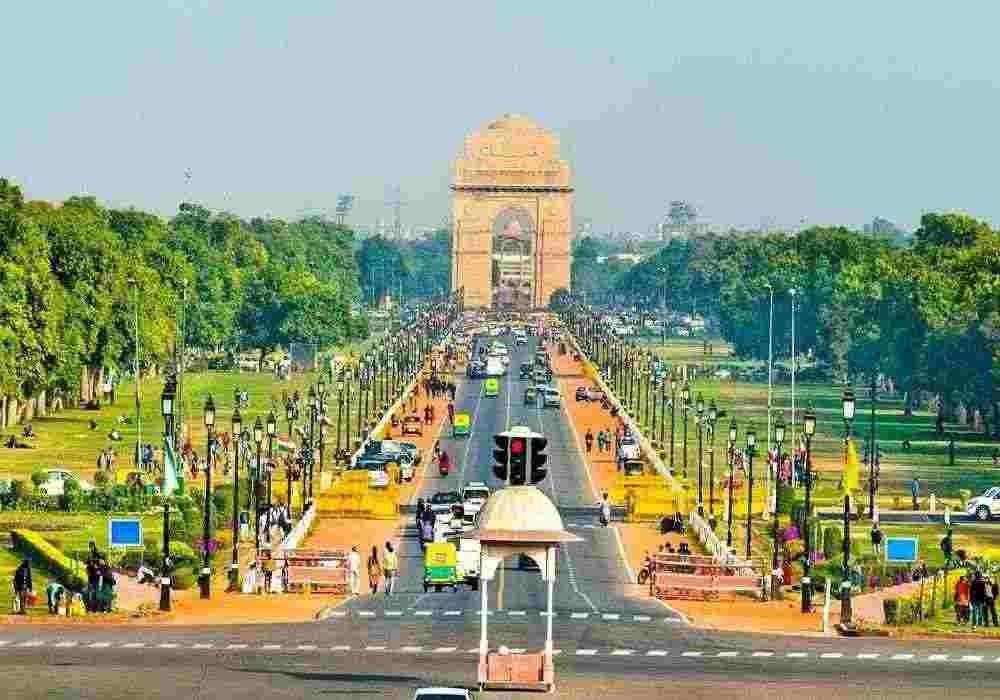
Discover the historic landmarks of Delhi including Red Fort, Jama Masjid, India Gate, Qutub Minar, Humayun's Tomb, and Lotus Temple. Experience the fascinating blend of Mughal, colonial, and modern architecture. Overnight Stay: Delhi -
Day 3
Delhi – Aurangabad
Fly to Aurangabad, the gateway to the famous Ajanta and Ellora Caves. Check into your hotel and enjoy a relaxed evening. Overnight Stay: Aurangabad -
Day 4
Ajanta Caves Excursion
Spend the day exploring the Ajanta Caves, renowned for their ancient Buddhist monasteries, sculptures, and murals dating back over 2,000 years. Learn about India's rich artistic and spiritual heritage. Overnight Stay: Aurangabad -
Day 5
Ellora Caves & Local Sightseeing
Visit the spectacular Ellora Caves, featuring Buddhist, Hindu, and Jain monuments carved directly into rock. Explore the remarkable Kailasa Temple, one of the world's largest monolithic structures. Overnight Stay: Aurangabad -
Day 6
Aurangabad – Mysore
Fly via Bengaluru and proceed to Mysore. Upon arrival, check into your hotel and enjoy leisure time exploring local markets. Overnight Stay: Mysore -
Day 7
Mysore Sightseeing
Visit the grand Mysore Palace, Chamundi Hills, St. Philomena's Church, and Brindavan Gardens. Experience the elegance and history of Karnataka's royal city. Overnight Stay: Mysore -
Day 8
Mysore – Goa
Transfer to the airport and fly to Goa. Upon arrival, check into your beach resort and relax by the Arabian Sea. Overnight Stay: Goa -
Day 9
North Goa Sightseeing
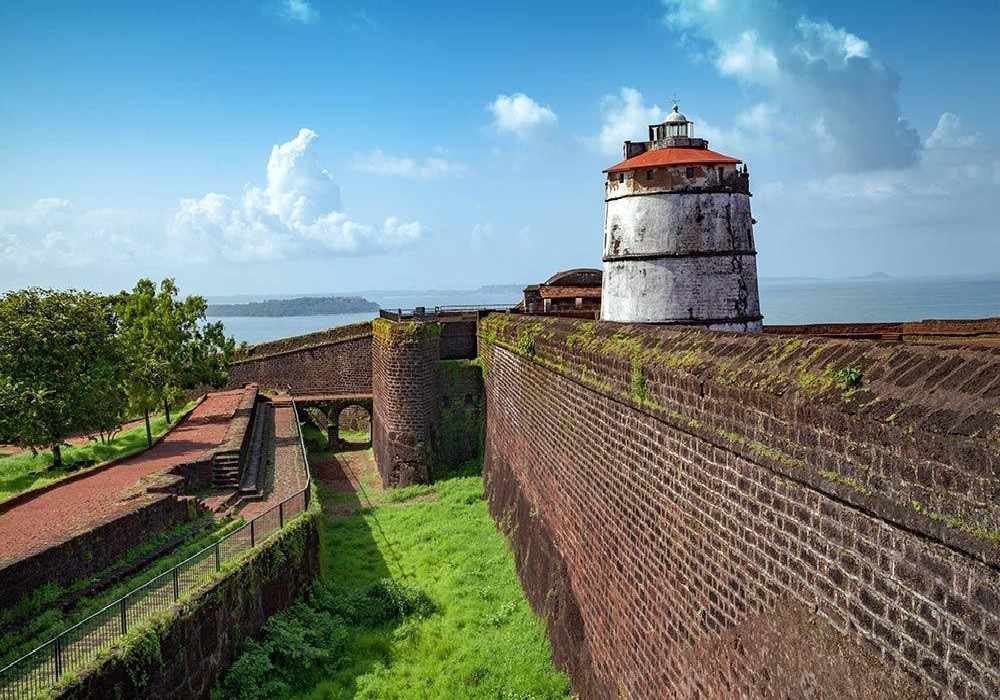
Explore popular attractions including Baga Beach, Calangute Beach, Fort Aguada, Candolim Beach, and local markets. Optional water sports activities are available. Overnight Stay: Goa -
Day 10
South Goa Exploration
Visit Basilica of Bom Jesus, Se Cathedral, Dona Paula, Miramar Beach, and Panaji. Enjoy Goa's unique blend of Indian and Portuguese culture. Overnight Stay: Goa -
Day 11
Goa Departure
Enjoy breakfast before transferring to Goa Airport for your return journey to Stuttgart with wonderful memories of India.
-
Day 1
-
Similar Packages in Germany to Delhi Tour
![]() From ₹124,999 View Details
From ₹124,999 View Details![]() From ₹114,999 View Details
From ₹114,999 View Details![]() From ₹109,499 View Details
From ₹109,499 View Details![]()
Dresden to India Gate Ajanta Ellora Mysore Palace Calangute Beach Tour Package
Delhi
12 Nights / 13 Days
From ₹122,999 View Details
Other Tours in Delhi
![]() From ₹116,999 View Details
From ₹116,999 View Details![]() From ₹129,999 View Details
From ₹129,999 View Details